In short
- Mild and fairly dry: average highs of 20 °C in January–February and 11 °C in July; only 715 mm of rain a year and about 2,100 hours of sunshine (NIWA).
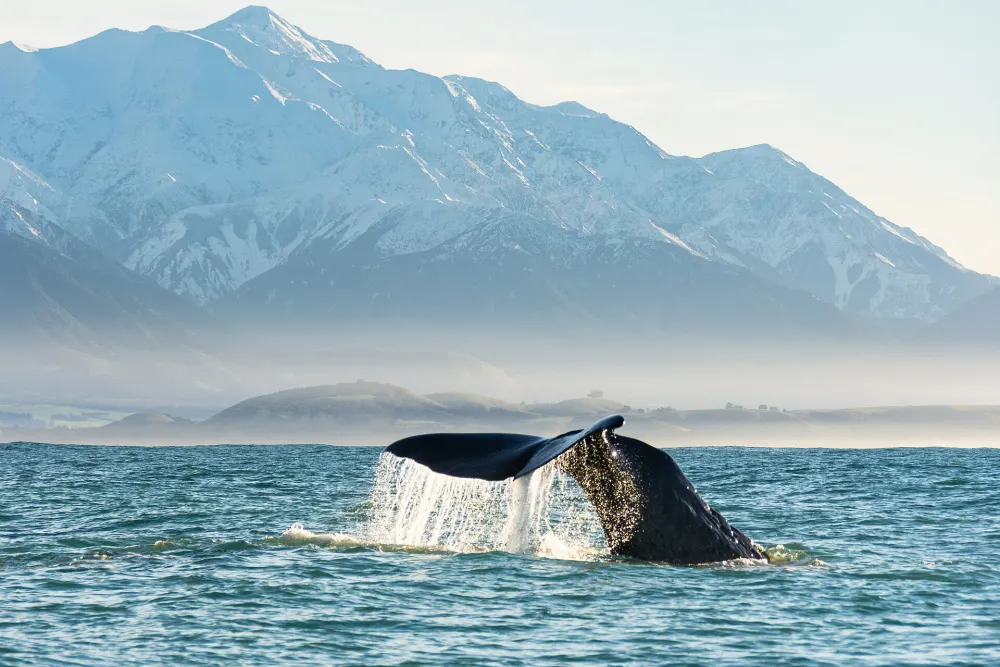
- Whales any month: sperm whales are resident; humpbacks pass mainly in June–July; dusky dolphins, fur seals and albatrosses are seen all year.
- Best overall: March–May and September–November – settled weather, snow on the peaks in spring, fewer crowds than summer.
- Wind matters more than rain: a cold southerly change can cancel boat trips at short notice – plan a spare morning.
- Busiest: late December to February and Easter. Quietest and cheapest: May–August (outside school holidays).
Kaikōura climate by month (NIWA)
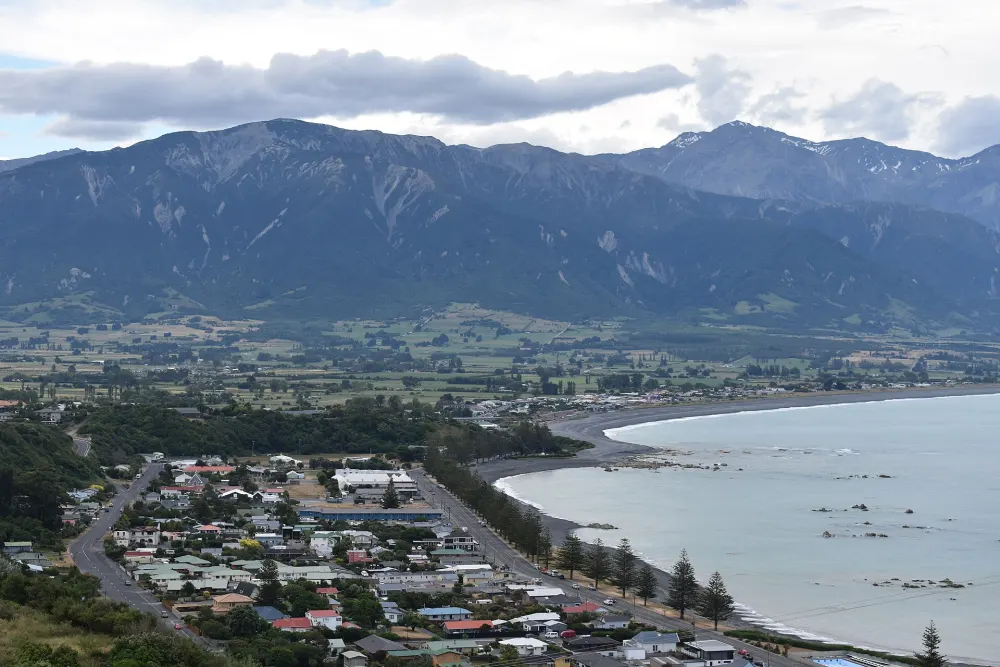
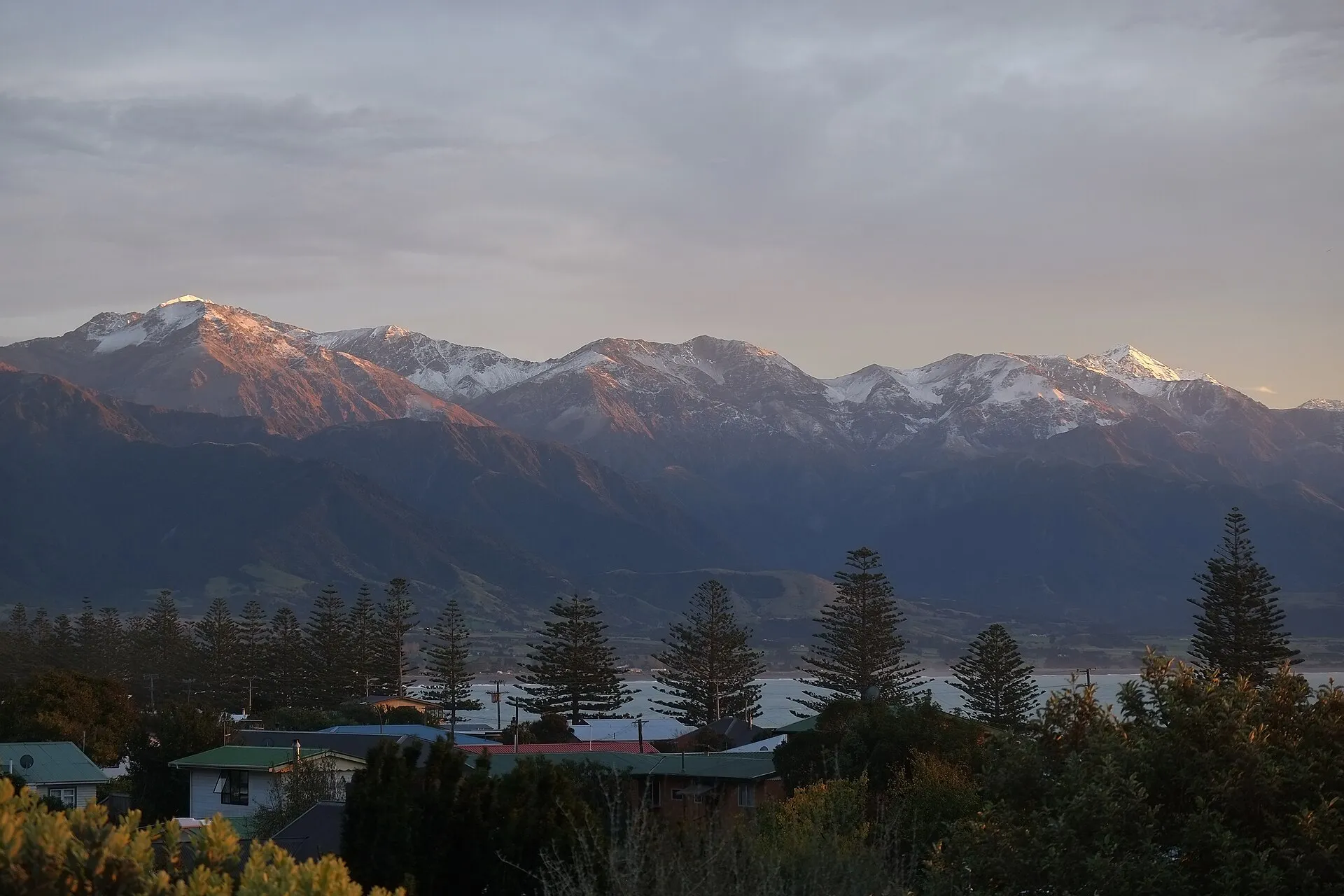
Kaikōura sits in the rain shadow of the Southern Alps, so it is drier and sunnier than many New Zealand coastal towns; its extremes are moderate (NIWA’s 1991–2020 records range from about −1 °C to 34 °C). Heavy rain does happen, though, usually with easterly or southerly storms – July 2026 brought a flood emergency when the Kōwhai River broke its banks.
| Month | Avg high (°C) | Avg low (°C) | Rain (mm) | Rain days | Sunshine (h) |
|---|---|---|---|---|---|
| January | 20.3 | 12.9 | 47 | 6.6 | 253 |
| February | 20.2 | 13.1 | 39 | 5.7 | 191 |
| March | 18.7 | 11.9 | 66 | 6.6 | 173 |
| April | 16.2 | 10.0 | 67 | 7.1 | 178 |
| May | 14.5 | 8.3 | 51 | 6.3 | 144 |
| June | 12.1 | 6.3 | 73 | 8.1 | 113 |
| July | 11.2 | 5.6 | 87 | 7.9 | 136 |
| August | 11.9 | 6.0 | 59 | 6.7 | 148 |
| September | 13.8 | 7.1 | 54 | 6.4 | 176 |
| October | 15.5 | 8.2 | 64 | 8.1 | 187 |
| November | 17.0 | 9.7 | 59 | 7.0 | 188 |
| December | 19.1 | 11.7 | 49 | 7.3 | 213 |
| Year | 15.9 | 9.2 | 715 | 84 | 2,100 |

Seasons at a glance
- Summer (December–February): warm days around 19–20 °C, long evenings (sunset around 9 PM local time near the solstice), busy roads, booked-out whale trips and accommodation. Fur seal pups are born from late November; dusky dolphins and seabirds are active. Coastal sea breezes keep it pleasant; inland it can be hot and dry.
- Autumn (March–May): often the most settled weather of the year, calm seas, soft light and far fewer visitors once Easter has passed. First snow may dust the peaks in May.
- Winter (June–August): crisp, clear days of 11–12 °C with frosty nights inland, snow-capped Seaward Kaikōura Range down to the foothills, and the humpback whale migration (mostly June–July). Short days (about 9.5 hours of daylight in June) and occasional southerly storms. Long, dark nights in the Dark Sky Sanctuary.
- Spring (September–November): lambs on the hills, snow still on the peaks, the Coastal Pacific train back from 1 September, whitebait season (1 September – 30 October) and lively but changeable weather – west or nor’west winds can gust strongly.
Wildlife calendar
| Animal | When | Notes |
|---|---|---|
| Sperm whales | All year | Resident males feed over the Kaikōura Canyon – the reason trips run every month |
| Humpback whales | Mainly June–July | On their northern migration; also seen on the return in spring |
| Blue whales, orca, pilot whales | Occasional | Unpredictable; orca sightings are a lucky bonus |
| Dusky dolphins | All year | Often in very large pods; swims and watching from South Bay |
| Hector’s dolphins | Occasional | Small, rare dolphins sometimes close inshore |
| NZ fur seals | All year | Pups born late Nov–Jan; pups play in rock pools in late summer and autumn |
| Albatrosses & petrels | All year | More species and numbers in the cooler months |
| Hutton’s shearwater | Spring–autumn | Breeds in the mountains; big rafts offshore; absent in winter |
How weather affects whale watching
Rain alone seldom stops a trip – wind and swell do. Boats are cancelled or turned back when the sea is too rough to find and watch whales safely, most often during a southerly or a strong north-easterly. Flights are less affected by swell but need reasonable cloud height and wind; the extended mountain section of a flight may be dropped if the peaks are in cloud.
Early-morning departures are often calmer. Book for your first morning in town, check the operator’s status on the day, and if you are prone to seasickness on a lumpy day, consider switching to a flight. Operators’ policies on cancellations and “no whale” refunds are compared on our whale-watching page.
Best time to visit Kaikōura
- For whales: any month for sperm whales; June–July for the best chance of humpbacks too.
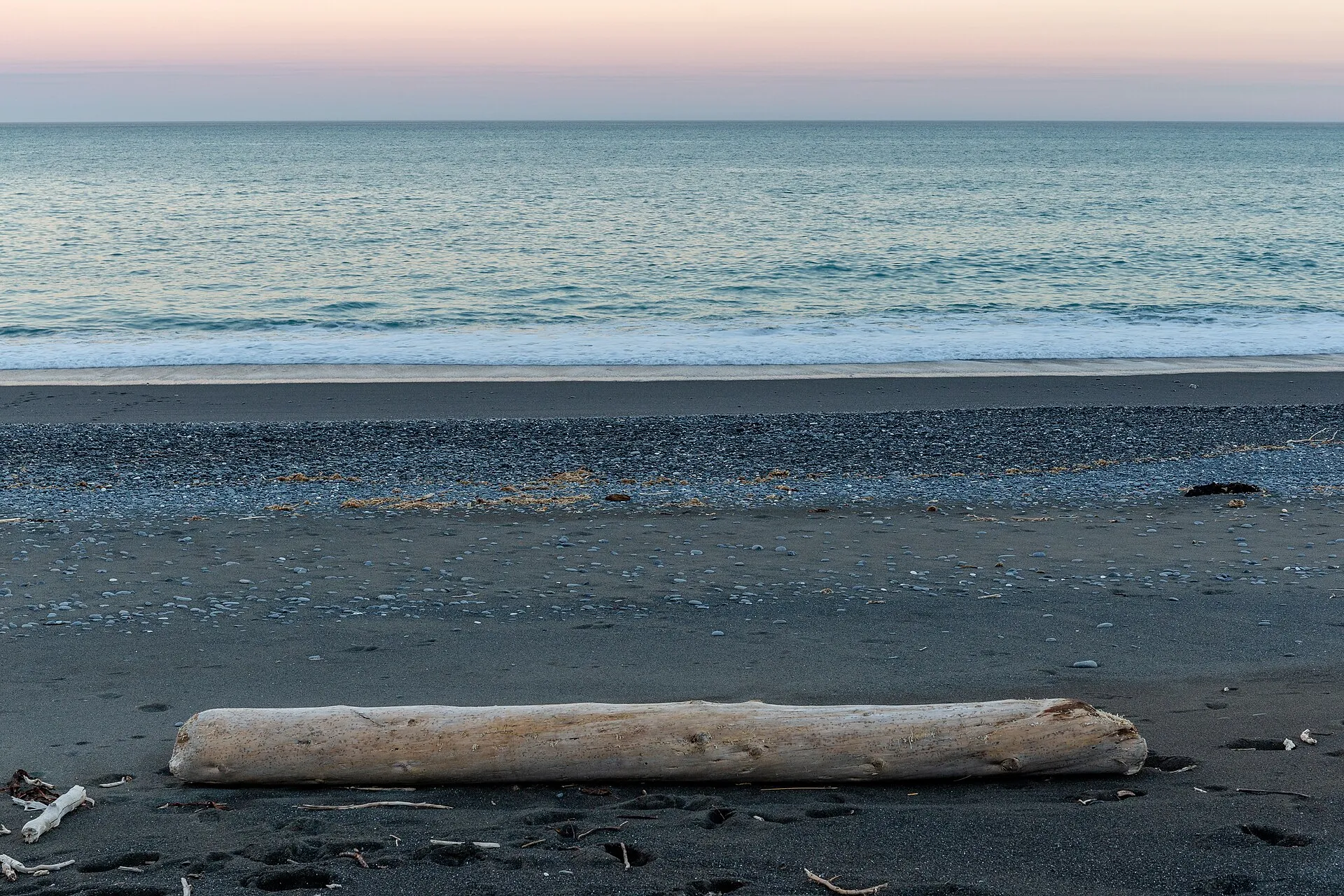
- For calm seas and fewer people: March to May.
- For snowy-mountain photos: June to October, when the range is white down to the bush line.
- For warm-weather walking, kayaking and swimming with seals: December to March.
- For stargazing: clear nights from April to September (long nights).
- For the train journey: September to April (no Coastal Pacific service in May–August).
Busy periods: Christmas to the end of January (New Zealand summer holidays), Easter and school holidays. Mid-winter (outside school holidays) has the lowest accommodation rates.
What to pack
- Layers in every season – a windproof and waterproof jacket is essential, even in summer, for boats, flights and the peninsula.
- Warm hat and gloves from May to October for early whale trips and stargazing.
- Sunscreen, sunglasses and a sun hat – New Zealand’s UV levels are high, especially September–March.
- Seasickness tablets if you are taking a boat.
- Sturdy shoes for the Peninsula Walkway and Mt Fyffe.
Events through the year
- September: Kaikōura Whale Run (half marathon, 12 km and 5 km) – 5 September in 2026.
- October: Kaikōura Mountains to Sea (marathon and shorter distances from South Bay) – 24 October in 2026.
- June–July: Matariki (Māori New Year) events, including community stargazing evenings.
- December–January: summer holiday season; Waitangi Day (6 February) and Easter are busy long weekends.
Note: Kaikōura Seafest, the October food festival many older guides list, has not been held since 2017.
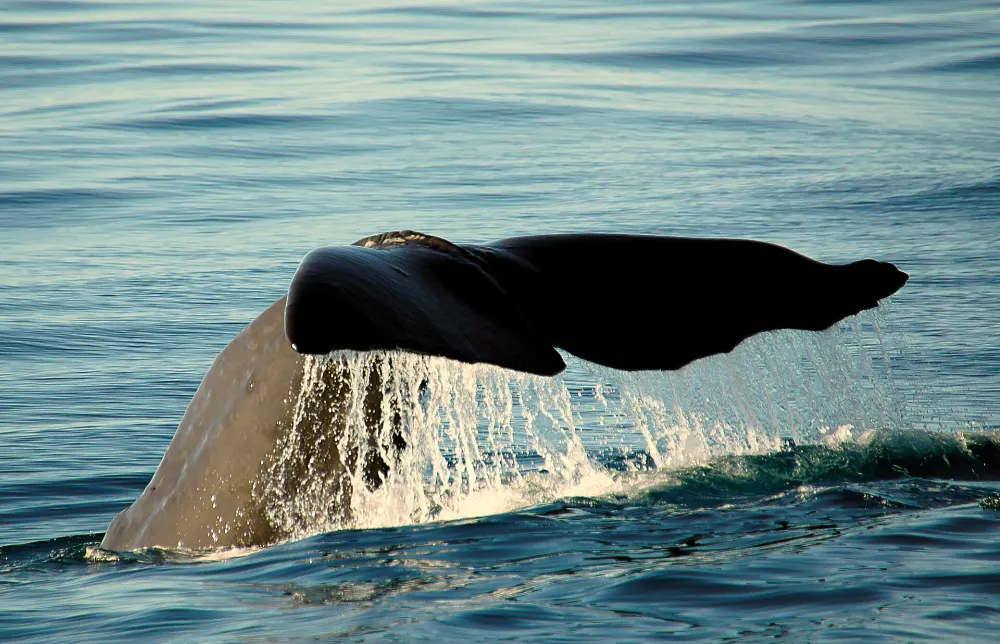
Whale Watching Cruise with Whale Watch Kaikoura
The classic Kaikōura whale encounter on a modern catamaran with the Ngāti Kurī-owned original operator: sperm whales year-round, often dusky dolphins, seals and albatross. 80% refund from the operator if no whale is seen. Rated 4.6/5 from 3,939 reviews on GetYourGuide (as of November 2026).
Check availabilityBook via GetYourGuide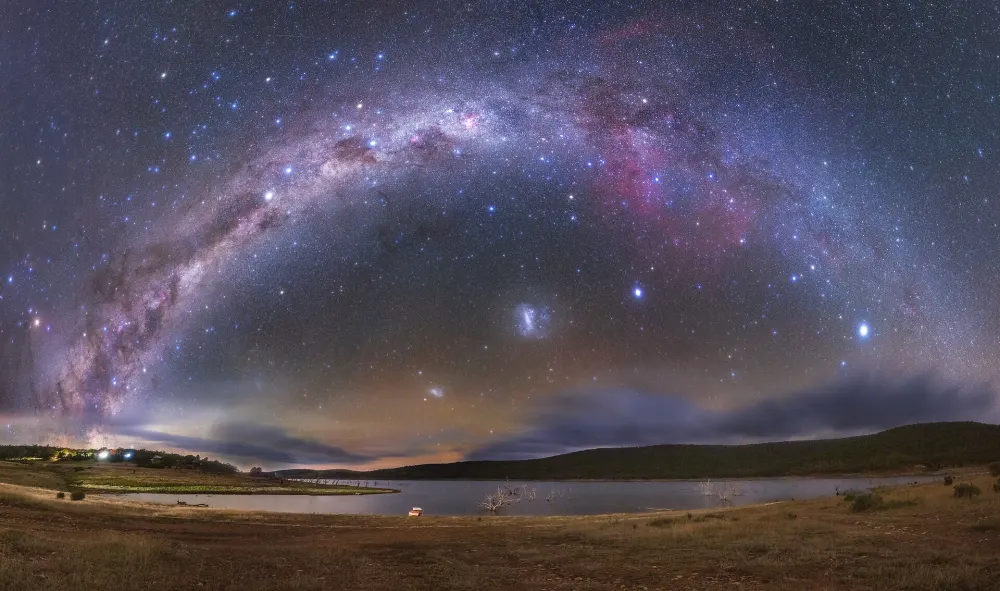
Kaikōura: Explore the Cosmos stargazing tour
Guided stargazing in the Kaikōura International Dark Sky Sanctuary: the Milky Way, southern constellations and star lore.
Check availabilityBook via GetYourGuideTour listings are on GetYourGuide. Prices, times and cancellation terms are shown live on each listing and can change; Kaikoura.com may earn a commission at no extra cost to you.
Frequently asked questions
What is the best month to visit Kaikōura?
For most visitors, March–April or October–November: settled weather, fewer crowds, whales year-round. Visit in June–July for humpback whales as well as sperm whales.
How cold does Kaikōura get in winter?
Average July highs are about 11 °C and lows about 6 °C on the coast (NIWA); frosts are more common inland, and the mountains are snow-covered.
Does it rain a lot in Kaikōura?
No – about 715 mm a year over roughly 84 rain days, with June–July the wettest months. Wind is the bigger factor for activities.
Can you see whales in winter?
Yes. Sperm whales are seen year-round, and June–July is the main humpback season.
When is Kaikōura busiest?
From Christmas to the end of January, plus Easter and school holidays. Book whale trips and accommodation early then.
Sources and official information
Facts were checked against these official sources in November 2026. Opening hours, prices and timetables change, so confirm before you go.
Kaikoura.com is an independent guide, not the official site of any tour operator or of the Kaikōura District Council. Some links are affiliate links: tours go to GetYourGuide and hotels go to Booking.com, and we may earn a commission at no extra cost to you.