In short
- Sperm whales (parāoa) are the residents: almost all males, present in every month, feeding on squid in the Kaikōura Canyon.
- Humpbacks (paikea) pass mainly in June–July (sometimes into August); orca are seen most often in summer; pilot, blue, southern right, fin and sei whales are occasional visitors.
- The canyon brings water more than 1,000 m deep close to the coast; research since 1990 has identified more than 200 individual sperm whales by their tails.
- Annual numbers of male sperm whales visiting Kaikōura fell from an estimated 89 in 1991 to 40 in 2017 (University of Otago study), a reason the area is closely protected.
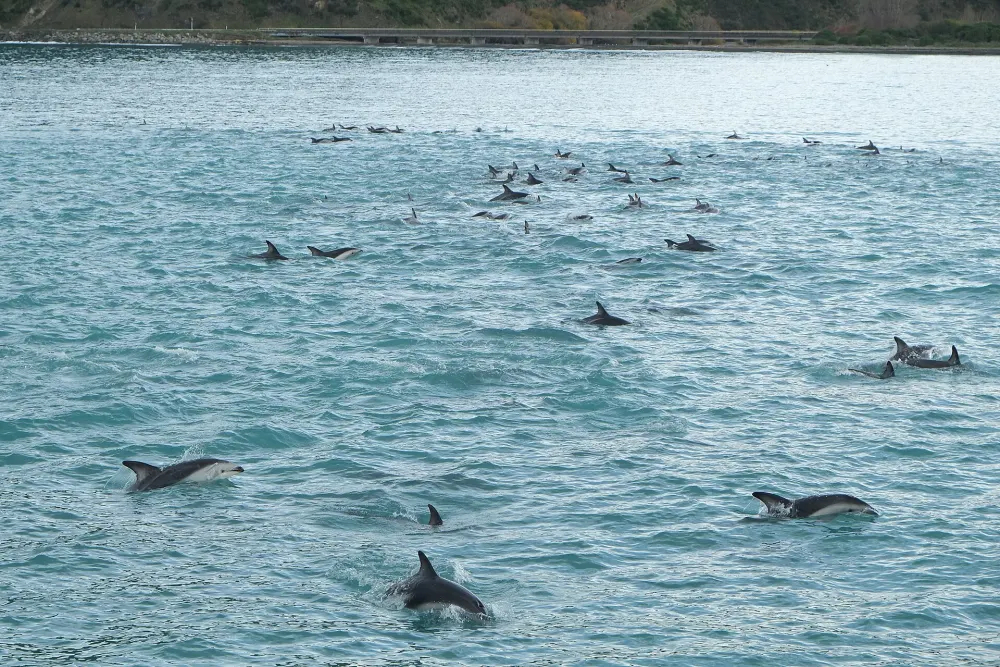
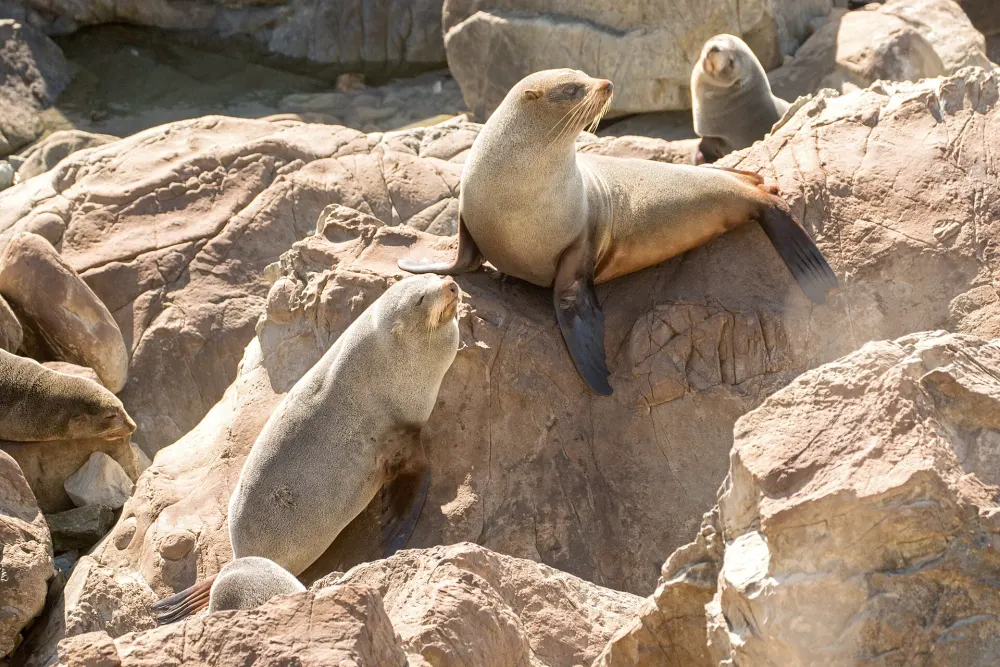
- Above the whales: dusky dolphins, fur seals and 13 or more albatross species.
The Kaikōura Canyon: a deep-sea larder next to the beach
Off most coasts the continental shelf runs out for tens of kilometres before the sea floor drops away. Off Kaikōura it barely exists. The Kaikōura Canyon, about 60 kilometres long, begins just south-west of the peninsula, with its head in roughly 30 metres of water, and plunges to more than a thousand metres within a few kilometres of the shore; south of Goose Bay the deep water lies only about a kilometre from the beach. Further out, at around 2,000 metres, it feeds into the Hikurangi Channel, which carries sediment some 1,500 kilometres out into the Pacific.
Currents along the canyon walls bring nutrients up from the depths and concentrate food. A 2006 NIWA expedition found the canyon floor teeming with life, with biomass far greater than other deep-sea habitats studied, earning it a place among the most productive deep-sea environments known. At the top of that food web sit squid and deep-water fish, and at the top of that, the sperm whale.
The 2016 Kaikōura earthquake (magnitude 7.8) triggered a massive submarine landslide and turbidity current that flushed an estimated 850 million tonnes of sediment out of the canyon and devastated its seabed communities. NIWA surveys since then found recovery far faster than expected: within about four years the seabed community looked similar to its pre-earthquake state. The whales kept coming throughout.
- Length
- ≈ 60 km
- Depth
- ≈ 30 m at the head, > 1,000 m close inshore, ≈ 2,000 m at the Hikurangi Channel
- Closest deep water
- ≈ 1 km from shore south of Goose Bay
- Protection
- Hikurangi Marine Reserve (2014, ≈ 10,400 ha) and the Te Tai o Marokura marine area
Sperm whale (parāoa): the star resident
The sperm whale is the largest toothed animal on Earth. Adults measure 11 to 18 metres, and about a third of that is the huge, square head, filled with the waxy spermaceti that helps the whale focus the clicks it uses to find prey in total darkness. In Māori the sperm whale is parāoa; its jawbone was prized for carved weapons and ornaments.
The whales at Kaikōura are young and adult males. Females and calves live in social groups in warmer subtropical waters, while maturing males roam towards the poles to feed. Here they hunt squid and fish in the canyon, eating roughly 3% of their body weight a day according to Whale Watch Kaikoura. A typical dive lasts 40 minutes or more (DOC notes that most dives last around 35 minutes to about 400 metres, but they can exceed an hour and 1,000 metres), followed by several minutes resting and breathing at the surface. That surface interval is your window.
University of Otago researchers have studied the Kaikōura sperm whales since 1990, identifying individuals from photographs of the notches and scars on their tails. Some are residents that stay for weeks or months and return in later seasons and years; others are transients seen only once. A 2022 study in Marine Mammal Science (Somerford and colleagues) estimated that the annual number of individual males visiting fell from 89 in 1991 to 40 in 2017, mainly in summer, possibly linked to changes in recruitment and ocean conditions. Watching them responsibly matters.
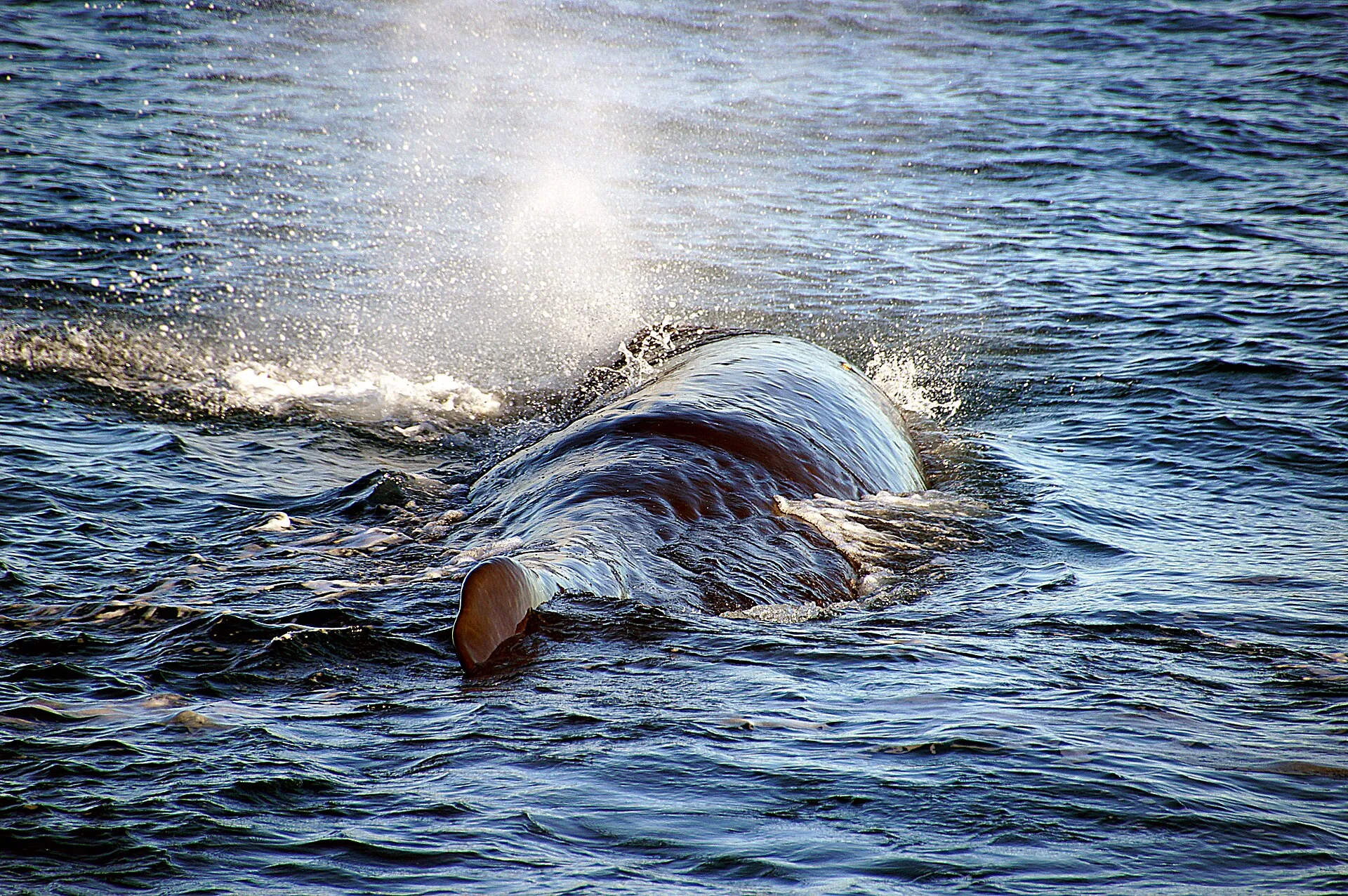
A sperm whale breathing at the surface off Kaikōura: its bushy blow angles forward and to the left.
How to read a sperm whale
- The blow: a low, bushy puff angled forward and to the left, because the single blowhole sits at the front left of the head. On a calm day you can see it from a long way off, and you will hear it from the boat.
- Logging: lying almost motionless at the surface between dives, breathing every few seconds, with the long wrinkled back just awash.
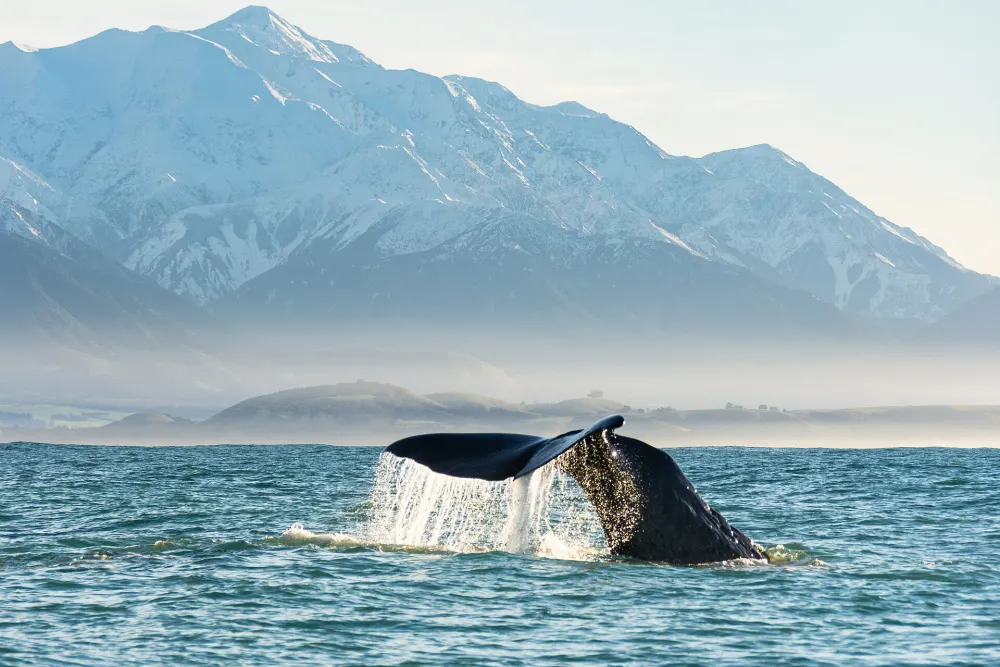
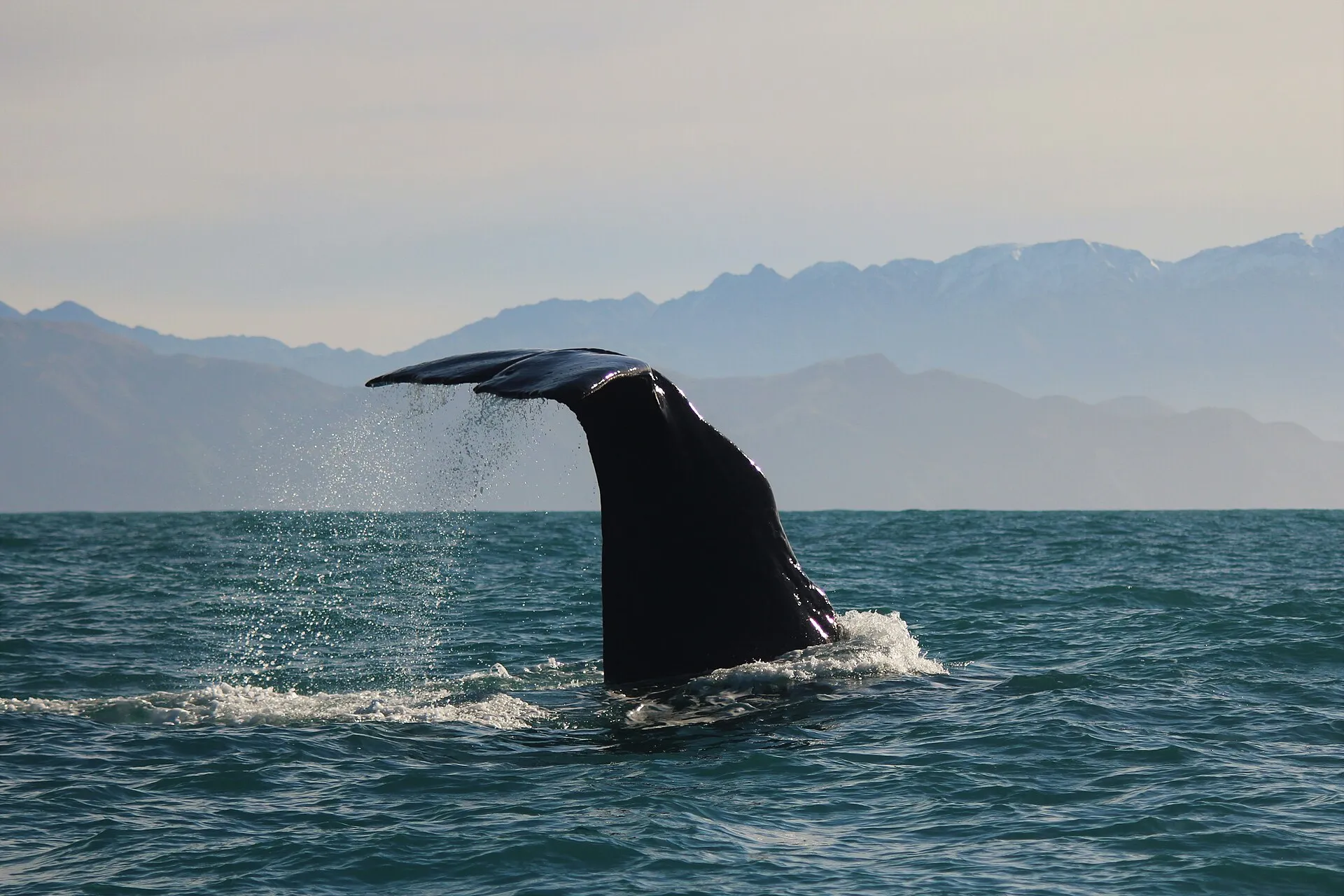
- Fluke-up dive: the whale arches, the back rolls forward and the broad triangular tail lifts clear of the water before it slides straight down. It will not be back for a long while.
- Identification: researchers and crews recognise individual whales from the shape, notches and scars on the trailing edge of the tail; many of the regulars have names.
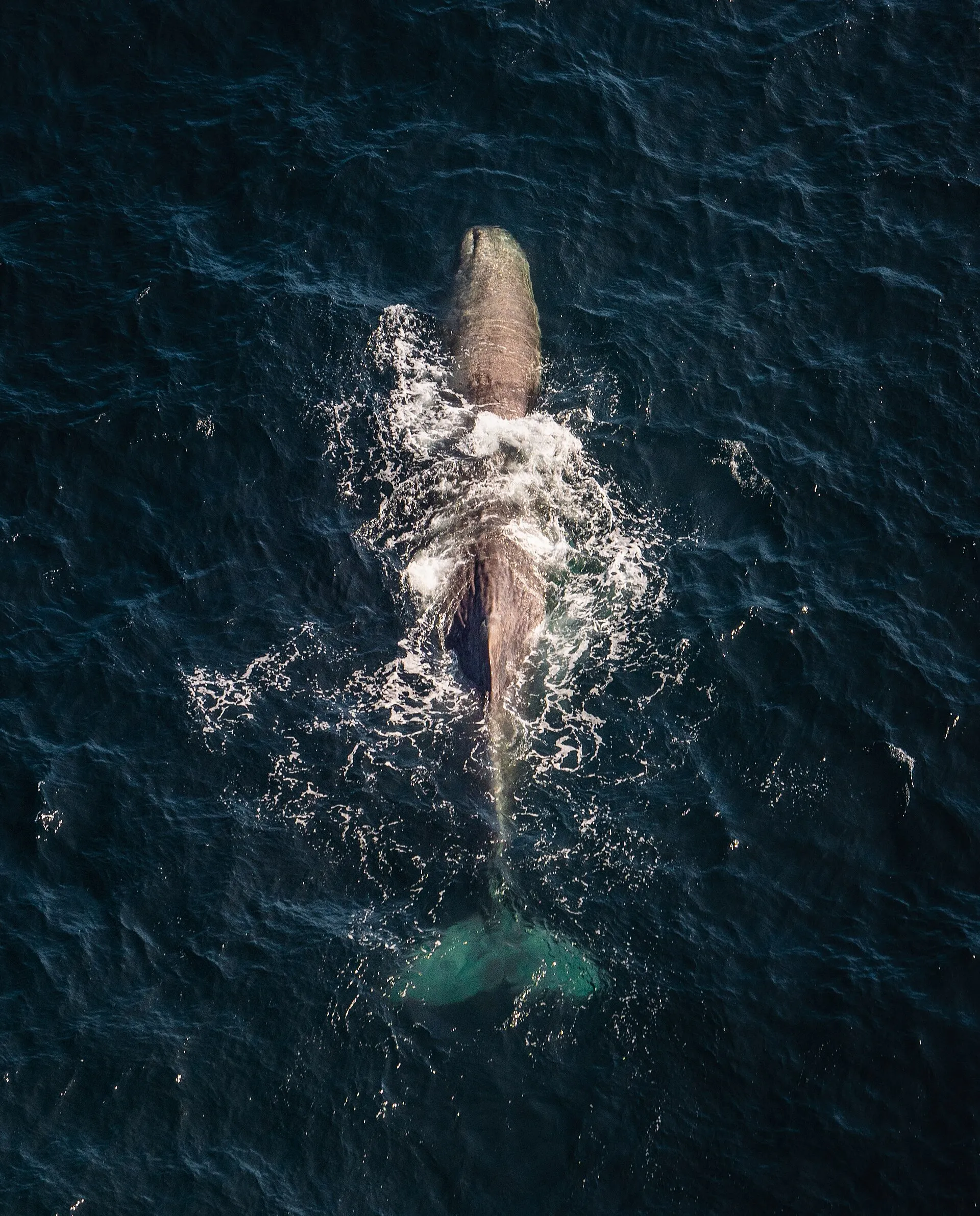
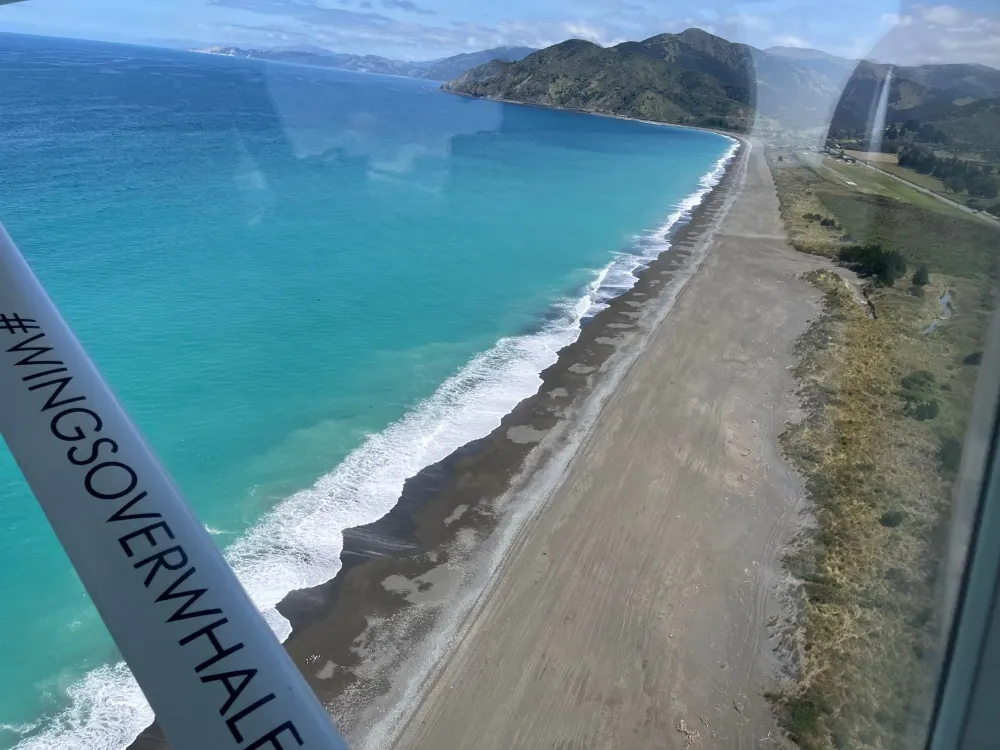
Seen from above, a sperm whale's whole body is visible under the surface: the view the whale-watching flights offer.
The other whales: who comes when
Kaikōura's canyon and the cold currents off the east coast of the South Island bring a long list of visitors. Under New Zealand's Marine Mammals Protection Regulations the word 'whale' covers baleen whales, sperm whales, beaked whales, killer whales and pilot whales.
| Species | Māori name | Size | When at Kaikōura | What to look for |
|---|---|---|---|---|
| Sperm whale | Parāoa | 11–18 m | All year (males) | Bushy blow angled forward-left; fluke-up dive |
| Humpback whale | Paikea | Up to ≈ 16 m | Mainly June–July (northbound migration), sometimes into August | Tall heart-shaped to bushy blow 3–6 m; long white flippers; breaching |
| Orca (killer whale) | Maki, kākahi | Male dorsal fin up to ≈ 1.8 m tall | Seen most often in summer | Tall black dorsal fin; hunting dolphins or seals |
| Long-finned pilot whale | — | Up to ≈ 6 m | Occasional | Pods of up to 100; rounded black head |
| Southern right whale | Tohorā | Up to 17 m | Occasional, mostly winter | V-shaped blow; no dorsal fin; pale callosities on the head |
| Blue whale | — | 24–30 m | Occasional, passing through | Very tall, column-like blow over 9 m |
| Fin and sei whales | — | Large baleen whales | Seasonal, occasional | Tall blow; small curved dorsal fin far back |
Whales and the people of Kaikōura
Whales are woven into the stories of Ngāti Kurī, the hapū of the Kaikōura coast. Their ancestor Paikea is said to have reached Aotearoa on the back of the whale Tohorā, and that story is at the heart of Whale Watch Kaikoura, the company Ngāti Kurī families founded in 1987.
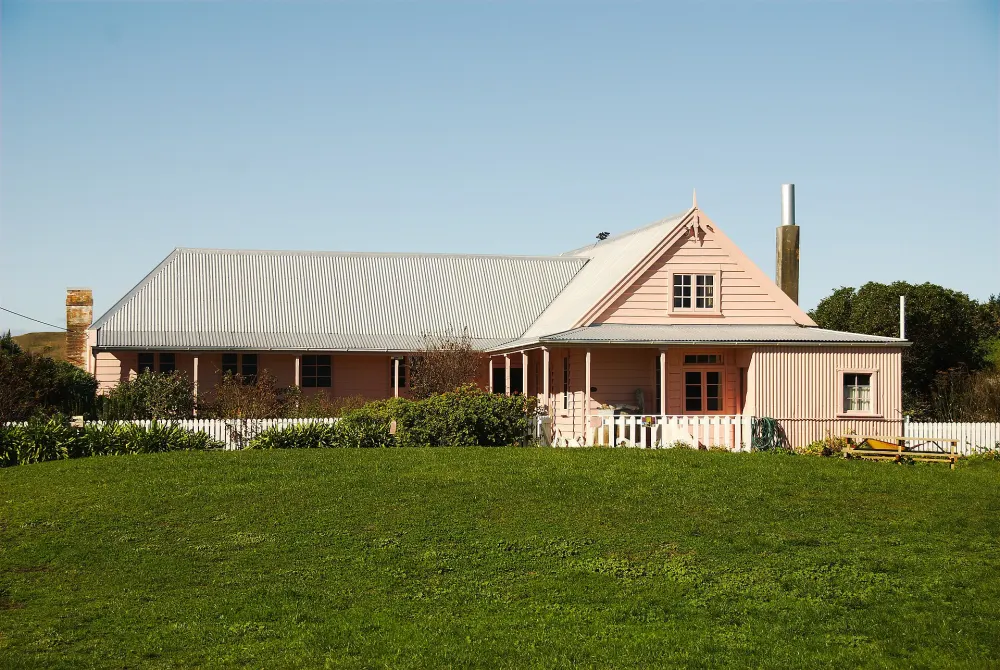
The European chapter was very different. Robert Fyffe began shore-whaling at Kaikōura in 1841–42, chasing southern right whales; their numbers collapsed within a few years, and humpback and sperm whales supported a small local industry until the early twentieth century. Commercial whaling in New Zealand ended in 1964. Fyffe House, the town's oldest surviving building, still stands on foundations of whale bone near the start of the peninsula. Read more in our history of Kaikōura.
Seabirds: albatross and shearwaters
The same upwelling that feeds the whales draws seabirds in astonishing variety. Whale Watch Kaikoura counts 13 albatross species, 14 petrels and 7 shearwaters off this coast, and Albatross Encounter, the specialist birding boat run from the Encounter Kaikōura base on the Esplanade, reports up to 15 albatross species (five great albatrosses and up to ten mollymawks). The wandering albatross, the bird with the longest wingspan on Earth, is a regular.
Kaikōura has its own endemic seabird too: Hutton's shearwater nests high in the Seaward Kaikōura Range and nowhere else, and a new colony protected by a predator-proof fence on the Kaikōura Peninsula is visited by the birds at night. From the peninsula you can also see shags, red-billed gulls (Whalers Bay has the South Island's largest colony) and oystercatchers on the reef platforms; see the seals and peninsula guide.
The best way to see them
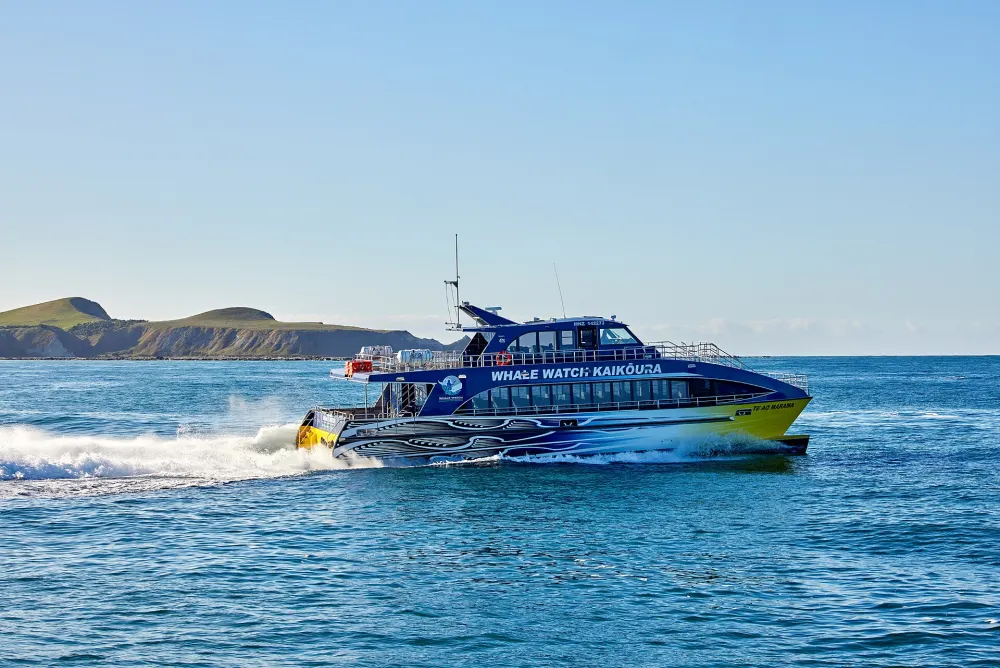
The cruise gives the classic whale encounter at sea level plus the best chance of dolphins and albatross; the flights show you the whole whale from above. Our whale-watching guide compares every option side by side, and Wings Over Whales and Whale Watch Kaikoura have their own detailed pages.
Frequently asked questions
What kind of whales are in Kaikōura?
Sperm whales live off Kaikōura all year. Humpbacks pass mainly in June–July, orca are seen most often in summer, and pilot, blue, southern right, fin and sei whales visit occasionally.
Why are there so many whales at Kaikōura?
The Kaikōura Canyon brings deep, nutrient-rich water within a few kilometres of the coast. It supports abundant squid and deep-sea fish, the sperm whale's food.
Are the Kaikōura sperm whales male or female?
Almost all are males. Female sperm whales and their young stay in warmer subtropical waters.
How long can a sperm whale stay underwater?
Typical dives off Kaikōura last 40 minutes or more; DOC notes dives can exceed an hour and 1,000 metres deep. Between dives the whale rests at the surface for several minutes.
What is the Māori name for the sperm whale?
Parāoa. The humpback is paikea and the southern right whale tohorā (also a general word for whale).
When is the best time to see humpback whales in Kaikōura?
Mainly June and July, during their northward winter migration; some still pass in August.
Did the 2016 earthquake drive the whales away?
No. The earthquake flushed the canyon and damaged its seabed life, but sperm whales continued to be seen, and NIWA found the seabed community recovering within about four years.
Sources and official information
Facts were checked against these official sources in November 2026. Opening hours, prices and timetables change, so confirm before you go.
- doc.govt.nz
- whalewatch.co.nz
- whalewatch.co.nz
- whalewatch.co.nz
- teara.govt.nz
- doi.org
- doc.govt.nz
- phys.org
- albatrossencounter.co.nz
- doc.govt.nz
Kaikoura.com is an independent guide, not the official site of any tour operator or of the Kaikōura District Council. Some links are affiliate links: tours go to GetYourGuide and hotels go to Booking.com, and we may earn a commission at no extra cost to you.